This is a subtitle for your new post
Australian bathroom renovation costs have jumped by a lot, reaching an average of $26,000 in 2023. This is a big deal as it means that the previous average of $21,000 from recent years is exceeded.
Bathroom renovations fall into three clear price categories. Budget-friendly makeovers cost between $8,000 and $15,000. Standard renovations range from $15,000 to $35,000. High-end projects with premium finishes start at $35,000. Labour makes up 40-50% of your total renovation budget.
Your bathroom's final cost depends on multiple factors. A simple makeover or minor bathroom renovation costs $10,000 to $15,000. Large projects with high-end design details can go beyond $40,000. Fixture prices vary too - toilet prices start at $250 for simple models and reach over $1,200 for premium options.
This piece explains Australian bathroom renovation costs, price-influencing factors, and ways to create your dream bathroom without overspending.
Planning Your Bathroom Renovation
Good planning is the lifeblood of any bathroom renovation project. You should set aside 3-4 weeks to research, design, and plan before buying fixtures or starting demolition. This time investment will help you avoid mistakes that can get pricey and give you results that match your needs and style.
Define your goals and scope
Start by clearly outlining what you want to achieve. Think over what you like about your current bathroom and areas that need work. Your bathroom might not need a complete overhaul - new fixtures could give you the fresh look you want.
Ask yourself if you want to:
- Fix existing problems
- Make the space more functional
- Use the available space better
- Boost your home's resale value
- Add accessibility features
- Update the look and style
Your goals will shape the project's scope and then the cost. To name just one example, moving fixtures like toilets, sinks, or showers will cost more because of plumbing and drainage changes. A clear set of priorities helps you spend money on things that matter most to you.
Create a renovation checklist
A detailed renovation checklist will guide you through the project. Even seasoned renovators can miss key details without one, leading to delays and budget issues.
Your bathroom renovation checklist should cover:
- Original Planning
- Your bathroom's measurements (dimensions, fixture spots, window/door locations)
- Budget planning with 5-15% extra for surprises
- Project timeline and backup bathroom plans during work
- Design Elements
- Layout choices (keeping or changing current setup)
- Material picks (tiles, fixtures, lighting, ventilation)
- Storage needs and solutions
- Professional Services
- Needed trades (plumbers, electricians, tilers, plasterers)
- Compliance certificates and approvals
- Completion Verification
- Wall and floor tile quality checks
- Plumbing tests (taps, mixers, drains, leak checks)
- Electrical work (sockets, switches, lighting, ventilation)
This list helps you track progress and makes sure everything works before finishing the project.
Get multiple quotes from tradies
Multiple quotes help you compare services and prices. This process also shows you exactly what work needs to be done and spots potential issues early.
Before asking for quotes, make sure you have:
- Plans - including floor and drainage (if drainage changes are proposed)
- A list of fixtures and finishes you want
- Questions about timelines, warranties, and possible problems
- If in an older suburb, whether your home has asbestos
Bathroom renovations need several professionals - plumbers, electricians, tilers, plasterers, painters and maybe a builder to manage everything from demolition to completion. Watch out for quotes that seem too low - they often mean scams or poor work.
Ask for detailed quotes covering all parts of the renovation to avoid surprises. Being open about your budget helps tradies tailor their quotes to what you can spend.
Getting detailed quotes helps you plan better and avoid unexpected costs during your renovations.
Design and Layout Choices That Impact Cost
Your early design decisions shape the final cost of your bathroom renovation. Smart choices about layout changes and materials help you budget better.
Keeping vs changing the layout
The biggest budget decision you'll face is whether to keep your bathroom's current layout or rearrange it completely. You can save a significant amount of money in plumbing costs by keeping fixtures where they are. Moving just one fixture, like a toilet, can add a lot to your budget because of the complex plumbing work
A modernised approach works well with tight budgets - you can install new baths, showers, and vanities while keeping your original plumbing points.
All the same, you should watch out for cosmetic work affecting the flooring. Waterproofing can and will be damaged when things start to move around, which means you'll need specialist trades that cost more.
Choosing materials and finishes
Materials make up a large portion of your total renovation budget, so your choices are vital for managing costs. The price gap between simple and premium options is substantial:
- Floor and wall tiles: Simple ceramic tiles are an affordable option, while high-end natural stone offers a more luxurious look.
- Toilets: Basic toilet models are budget-friendly, whereas premium options feature advanced designs and finishes.
- Lighting: Vanity lights range from simple, functional styles to elegant, high-quality designs that enhance the bathroom’s ambience.
Budget-conscious renovators can pick alternatives that look like expensive materials. Porcelain tiles look just like natural stone but cost much less.
Water-efficient fixtures might cost more upfront, but they lower your water bills over time.
How design affects labour
Your design choices affect labour needs and the overall cost of your renovation project. Labour usually takes up a significant portion of your renovation budget. Typical costs vary by trade:
- Building and renovations: charged at an hourly rate, often higher for specialised or complex work
- Plumbing: one of the more expensive trades, especially for emergency or after-hours work
Electrical work: similar to plumbing, with costs rising for complex installations - Tiling: usually charged per square metre, with rates depending on tile type, layout, and complexity
Whatever design approach you choose, professional waterproofing remains mandatory. This work must comply with Building Code Australia and Australian Standard AS3740.
The quickest way to keep costs down is to keep existing plumbing locations, choose mid-range fixtures where they'll have the most impact, and minimise changes that need extra materials or labour hours.
Breakdown by Fixtures and Fittings
Bathroom renovation expenses depend heavily on fixtures and fittings. Their costs vary based on quality and style, which helps homeowners plan their budget better.
Vanities and basins
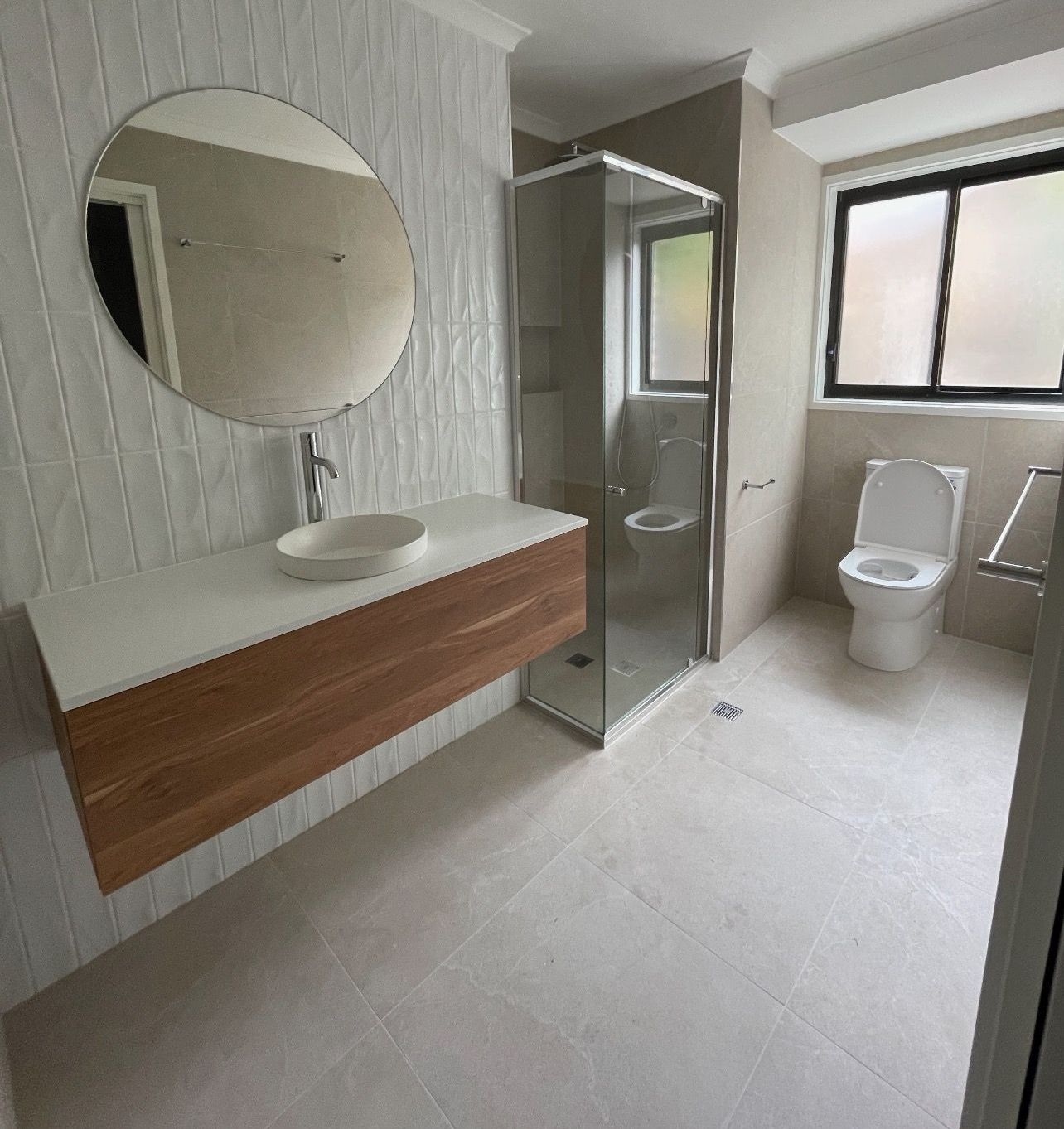
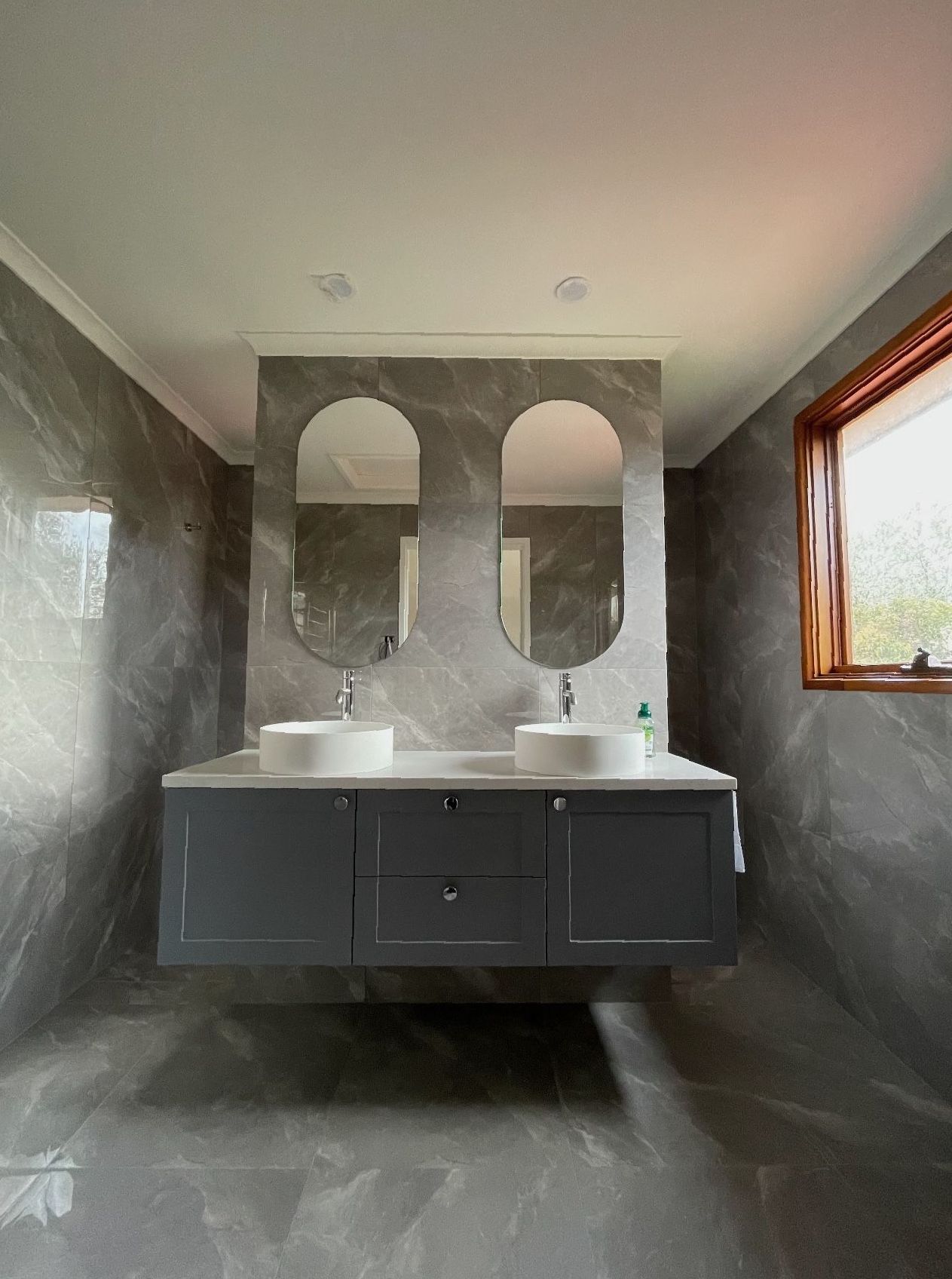
Bathroom vanities come in various designs, from simple units to custom luxury pieces. A standard wall-hung vanity with hidden handles offers a clean, modern look that suits most bathrooms. Floor-standing console vanities provide a more classic, furniture-style finish. For larger spaces, a double-bowl vanity can add both style and functionality.
Premium cabinetry in custom vanities typically starts at approximately AUD 2,000, with high-end models reaching around AUD 4,000. Basin prices begin at approximately AUD 200 for simple models and can go up to AUD 1,000 for designer options. Professional installation adds at least AUD 500 to the total cost.
Toilets and bathtubs
Style and features determine toilet prices. Simple toilets start at approximately AUD 250, while standard models cost around AUD 400. Wall-hung toilets (AUD 400-1000) and smart toilets (AUD 1,000-5,000) are premium investments. Installation costs range depending on the plumbing changes needed.
Bathtub prices show similar variation. Simple acrylic or fibreglass tubs cost between AUD 300-1,000. Mid-range enamelled cast iron or marble options typically range from AUD 300-750. Luxury freestanding stone bathtubs start at approximately AUD 4,500.
Shower screens and tapware
Design and materials affect shower screen prices. Framed shower screens typically cost AUD 600-900. Frameless options start at AUD 1,500+ because they need thicker glass. Walk-in shower panels range from AUD 450-700 and offer an elegant look.
Tapware comes in various price points. Simple models cost AUD 75. Mid-range options run AUD 150-450. Premium finishes like brushed nickel or matte black start at AUD 600. Each fixture needs about AUD 300+ for installation.
Lighting and heating options
Good lighting enhances both function and atmosphere in bathrooms. LED downlights cost AUD 30-75 per fixture. With installation, the total comes to AUD 100-300. Vanity lights range from AUD 50-100 for simple fixtures to AUD 500 for brighter options.
Ceiling and pendant lights add style, with costs depending on the design and quality. Installation prices vary based on complexity. Underfloor heating provides winter comfort, with costs influenced by the type of system and the area being heated. 3-in-1 bathroom heater units with ventilation and lighting features are available at mid-range prices.
The total cost for fixtures and fittings ranges from budget options to standard choices, while premium selections can be significantly more expensive.
Labour, Timelines, and Legal Requirements
Among other costs, learning about the timeline, labour requirements, and legal aspects is vital when budgeting for bathroom renovations.
How long does a renovation take?
Bathroom renovations usually take 3-6 weeks to complete once work starts. The Housing Industry Association reports that a full bathroom installation takes 25 days on average. The work follows this sequence:
- Demolition (1-2 days)
- Structural work and repairs (varies)
- Plumbing and electrical rough-ins (1-2 days each)
- Waterproofing (1-2 days plus 24-48 hours drying time)
- Tiling and grouting (up to 12 days, including drying time)
- Final plumbing and electrical installations (1-3 days)
- Plastering and Painting (1-2 days)
- Cleaning (1 day)
The timeline might extend if you find issues like asbestos or water damage during renovation.
Who you need to hire
Your bathroom renovation needs several licensed professionals:
- Builder (for structural modifications)
- Plumber (for fixture installation and plumbing)
- Electrician (for lighting and electrical work)
- Waterproofer (for waterproofing membrane application)
- Tiler (for floor and wall tiling)
- Painter
Licensed professionals will give a compliant renovation that meets building codes.
Permits, strata, and compliance
The Building Act 1993 and Building Regulations 2018 mandate building permits for all work unless specifically exempted. Your permit needs depend on the renovation scope:
- Cosmetic changes (replacing tiles or fixtures) rarely need permits
- Structural changes, major plumbing alterations, or electrical work need permits
Apartment renovations may require strata approval. You need to submit detailed plans to your strata committee and get majority approval (usually more than 50%). Minor renovations in strata properties take 2-4 weeks for approval, while major renovations that need general meeting votes might take 6-12+ weeks.
How to Renovate on a Budget Without Compromise
Smart choices help create beautiful bathroom renovations without breaking the bank. Homeowners can design stunning spaces while keeping costs under control.
Focus on cosmetic upgrades
A dated bathroom often needs just surface improvements instead of structural changes. Your space can look dramatically different with a fresh coat of paint, new fixtures, and updated accessories. You can refresh your bathroom affordably by repainting walls, switching drawer pulls, adding new shower curtains, and incorporating some greenery.
Reuse existing plumbing points
Your renovation budget can be saved substantially by keeping the current plumbing layout. Moving pipes adds a significant amount to renovation costs. The money saved from keeping current connections can go toward visible elements that create a greater visual effect.
Shop smart and look for discounts
Smart timing of purchases helps you save more money. Holiday sales at major retailers offer up to 50% off bathroom fixtures, especially during Black Friday, Boxing Day, and end-of-financial-year promotions. You can find barely-used fixtures at a fraction of retail prices through Gumtree and Facebook Marketplace. Buying tiles in bulk leads to savings.
When to splurge and when to save
Quality fixtures that see daily use deserve investment. The toilet, simple lighting, and floor tiles are areas where you can save money - price differences here aren't obvious to users or visitors. Affordable alternatives like quartz work well instead of expensive marble for countertops.
Conclusion
Australian homeowners spend anywhere from $8,000 to $40,000 on bathroom renovations. Your final budget depends on your design choices, materials, and the work to be done.
The best way to control renovation costs is proper planning. You should spend 3-4 weeks researching and designing your project before you start. This helps you avoid mistakes that can get pricey. Your existing plumbing layout can save you thousands when you keep it in place.
Smart shopping can substantially cut costs without losing quality. You'll get better results with limited funds when you buy during sales, look for budget-friendly materials, and put your money into features that make the biggest difference. Even budget-conscious renovators can create spaces that look amazing and work well.
Note that you need professional expertise, whatever your budget might be. Licensed tradespeople make sure your renovation meets building codes and quality standards. They protect your investment and safety. DIY might look appealing, but some parts of bathroom renovations just need professional help.
A perfect bathroom renovation matches your design dreams with what's practical. This piece gives you the knowledge you need to make smart choices about your project, whether you want a simple update or a complete makeover. With this information, you can direct your bathroom renovation experience and create a space that boosts your daily life and property value.
If you have more questions or are interested in finding out how much your bathroom, ensuite or laundry renovations will cost you, please don’t hesitate to contact our friendly team of trade professionals here at Dolphin Bathrooms.
FAQs
Q1. How much does an average bathroom renovation cost in Australia?
The average cost of a bathroom renovation in Australia is around $26,000 as of 2023. However, costs can range from $8,000 for a budget renovation to over $35,000 for premium finishes and fixtures.
Q2. What factors influence the cost of a bathroom renovation?
The main factors affecting bathroom renovation costs include the size of the bathroom, the quality of materials chosen, the extent of layout changes, labour costs, and whether any plumbing or electrical work needs to be relocated.
Q3. How long does a typical bathroom renovation take?
A full bathroom renovation usually takes 3-6 weeks to complete after work begins. This includes stages like demolition, structural work, plumbing and electrical, waterproofing, tiling, and final installations.
Q4. Do I need permits for a bathroom renovation?
Permits are generally not required for cosmetic changes like replacing tiles or fixtures. However, structural modifications, major plumbing alterations, or electrical work typically require building permits to ensure proper installation and compliance.
Q5. How can I renovate my bathroom on a budget?
To renovate on a budget, focus on cosmetic upgrades, maintain the existing plumbing layout, shop for discounts on materials, and consider doing some work yourself. Prioritise spending on high-impact elements while saving on less noticeable features.